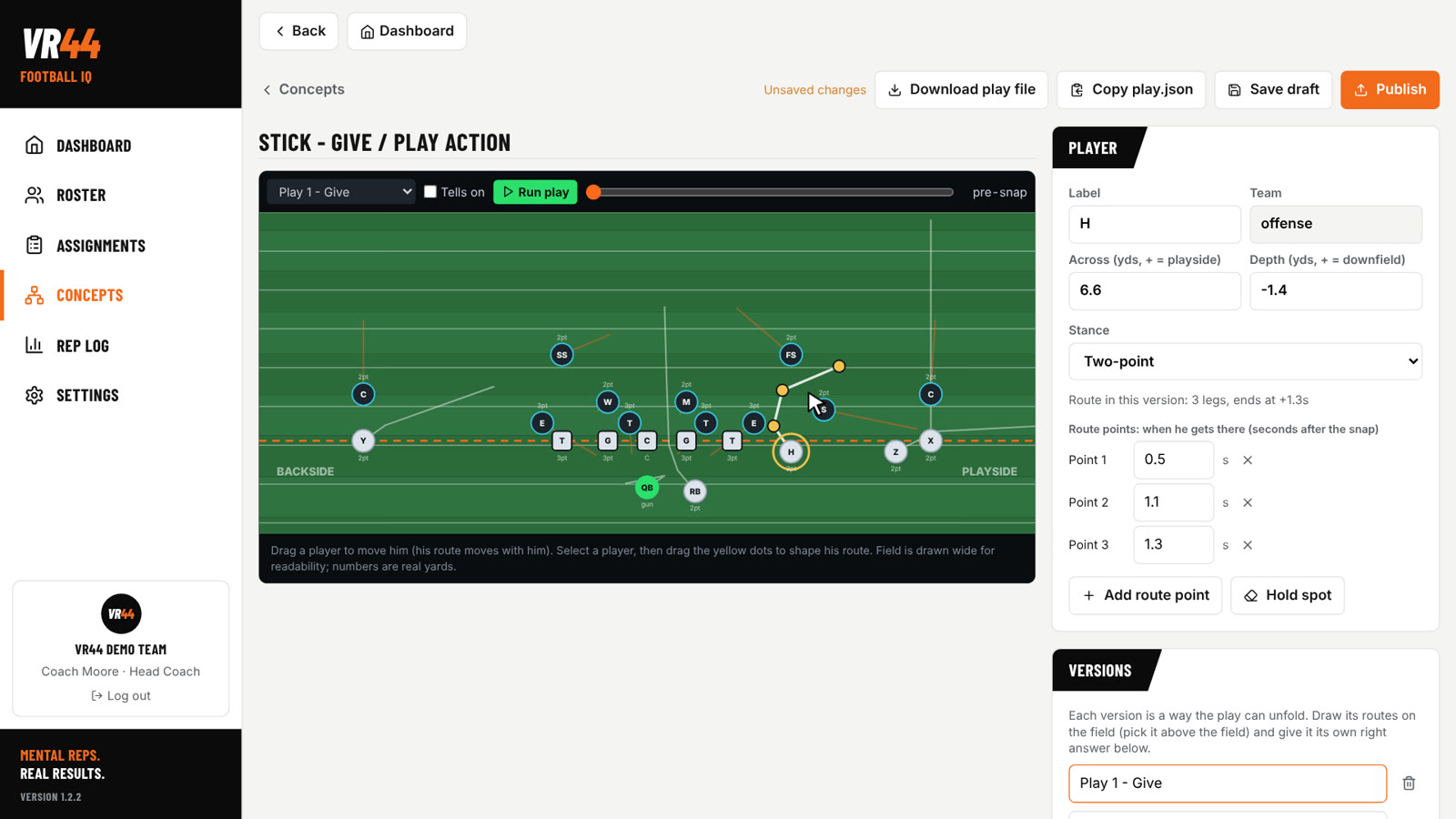
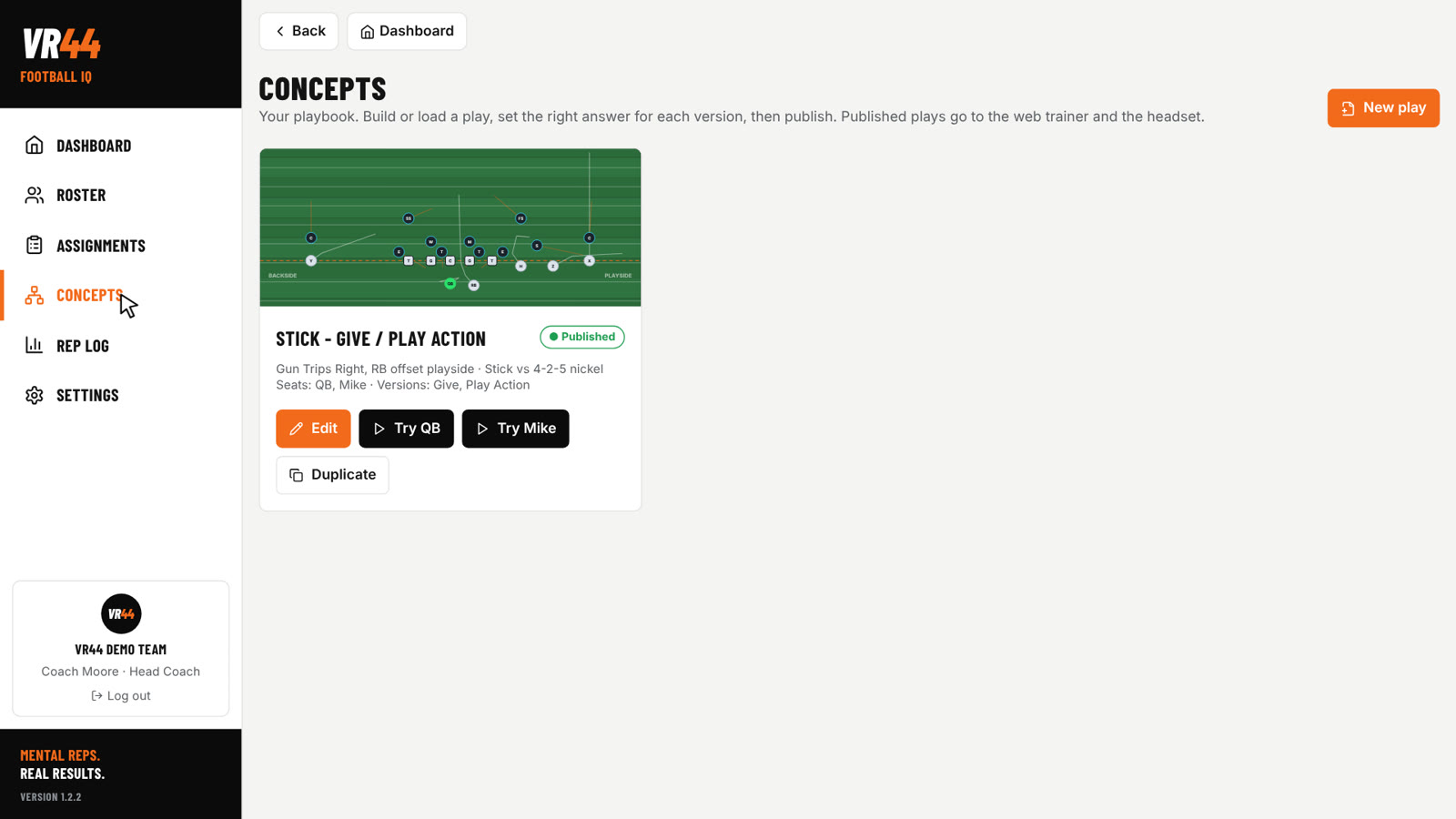
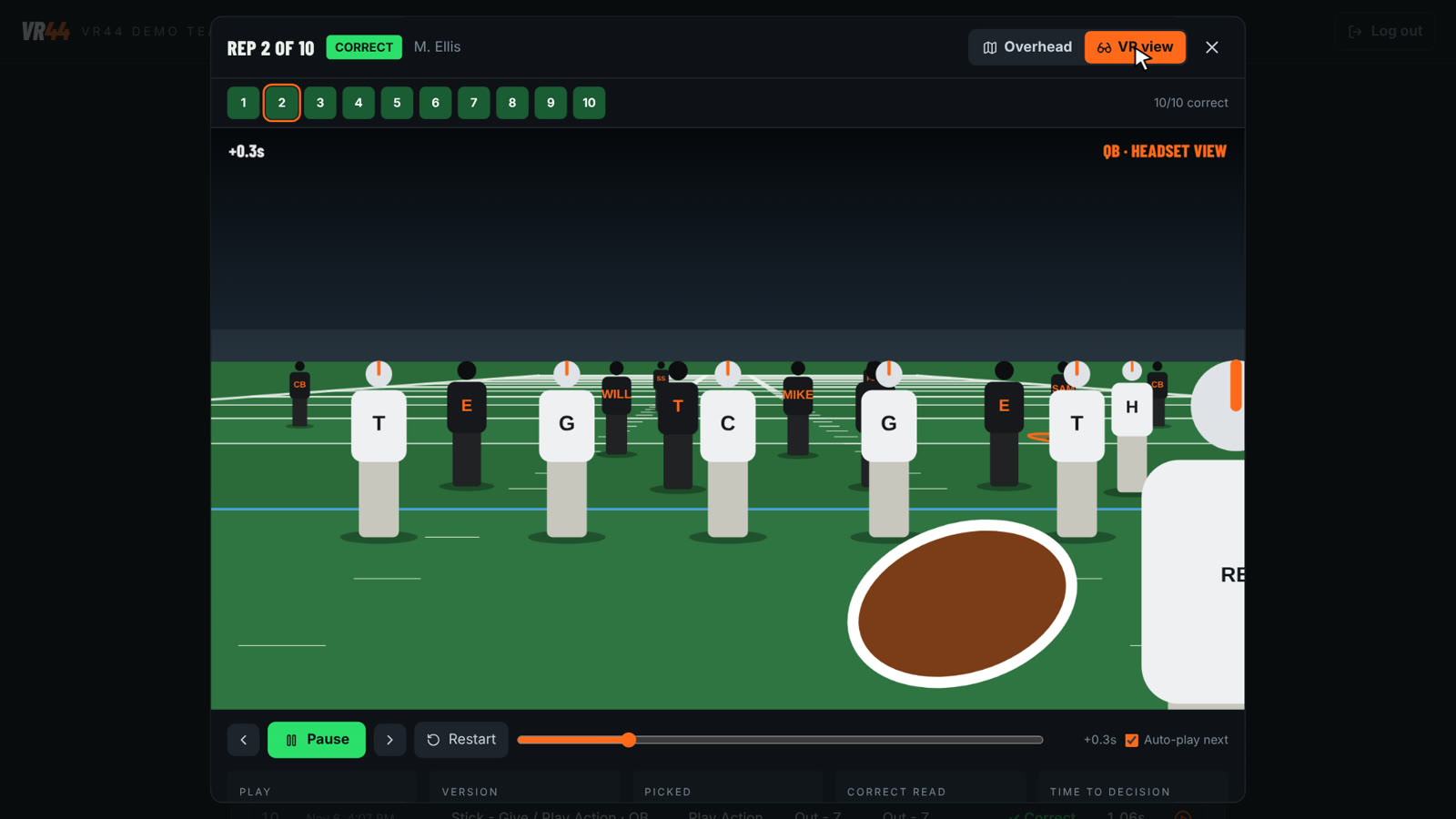
Picture a fourteen-year-old at his first real practice. He's handed a playbook — a binder of arrows and letters that means almost nothing to him yet. He's told where to line up. He's told what to do when the ball is snapped. And then he stands on the sideline and watches somebody else do it.
He might get five live reps all week. The starter gets most of them. The backup gets the leftovers. And the kid who's brand new — the one who needs them most — gets the fewest of anyone, because you can't hand live reps to a player who doesn't know where to stand yet.
So he learns slowly. Not because he isn't capable, and not because he isn't working. He learns slowly because nobody can see a play enough times to understand it when the play only happens five times.
Reps decide how fast you get there.
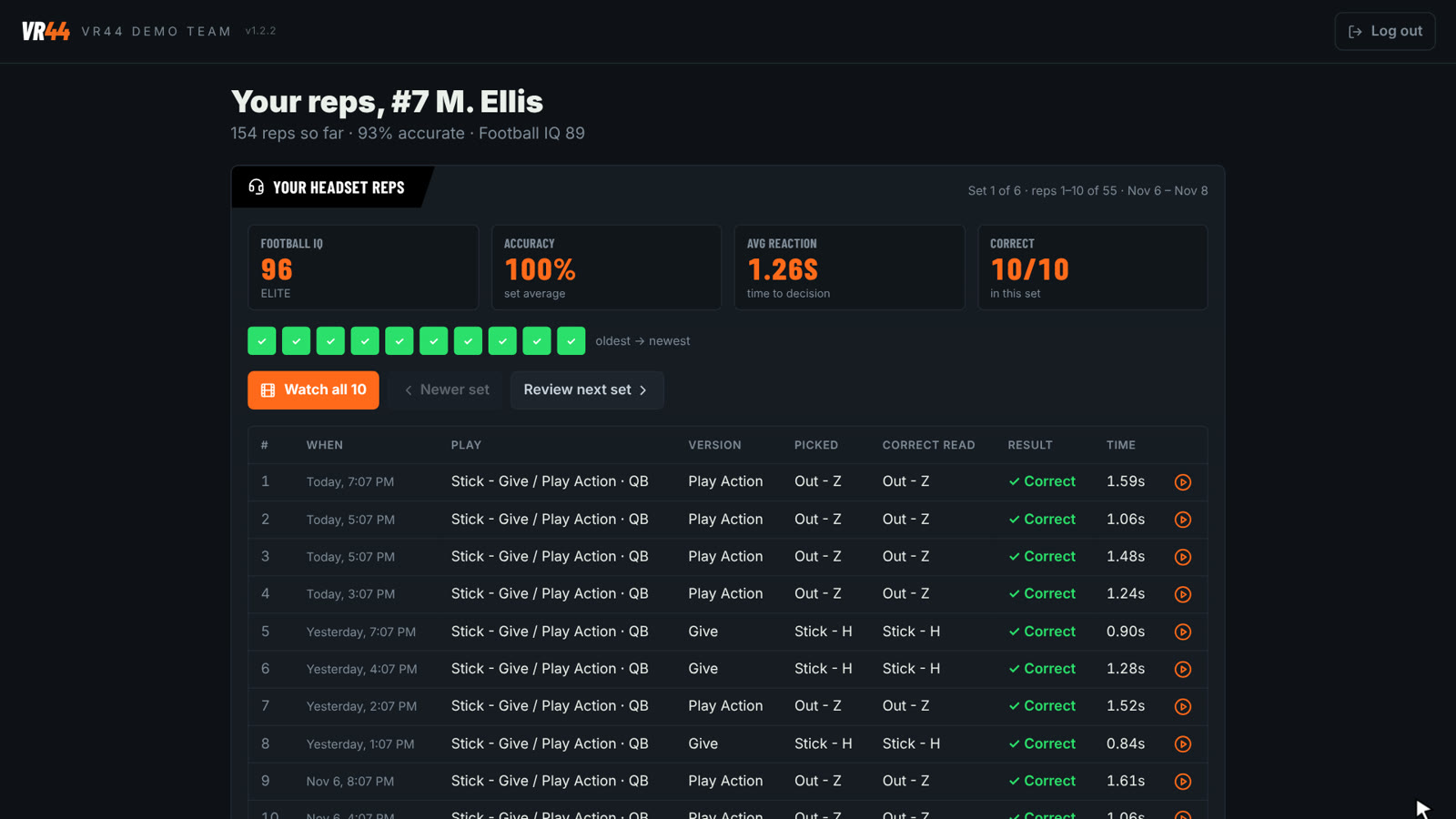
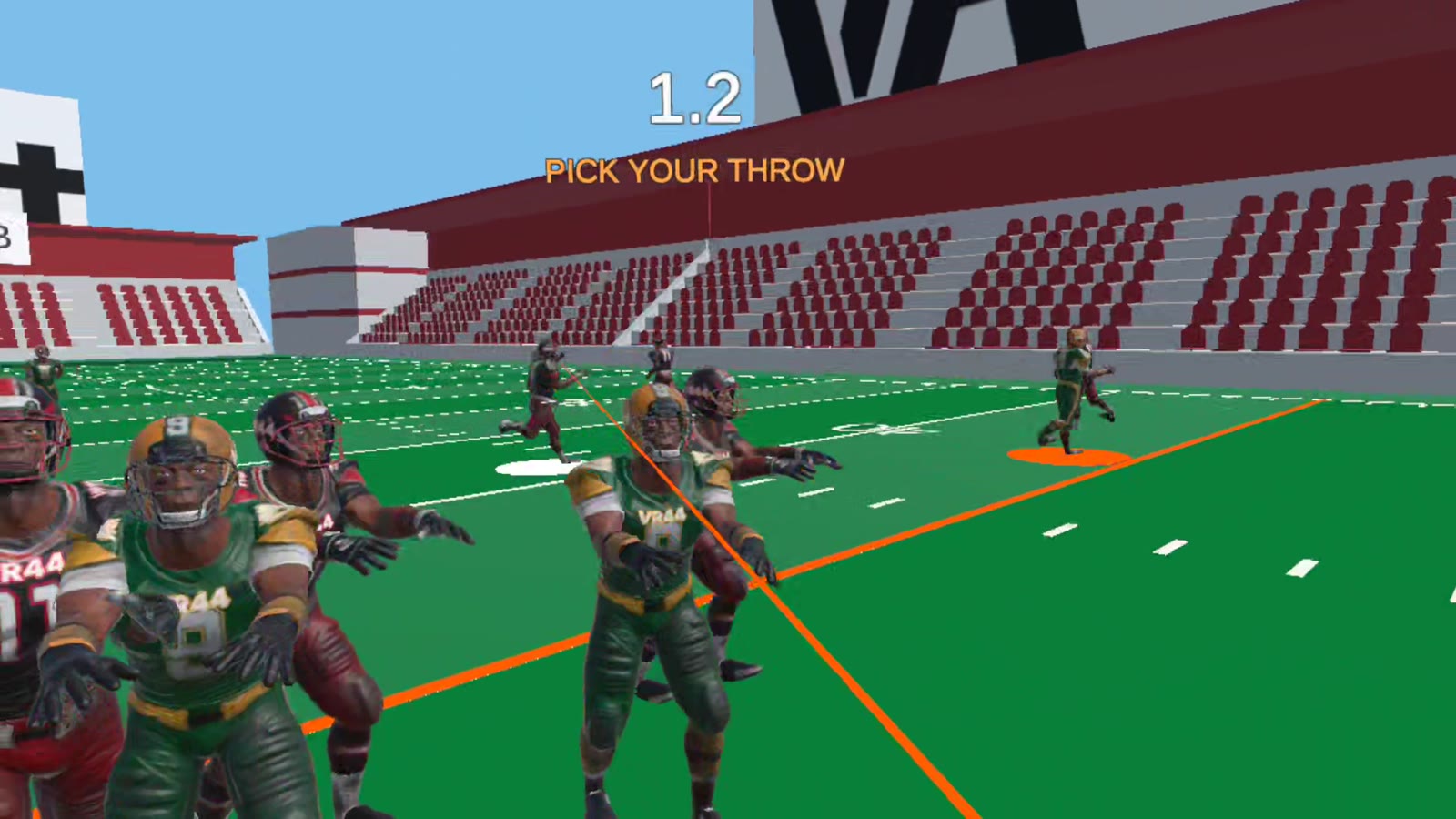
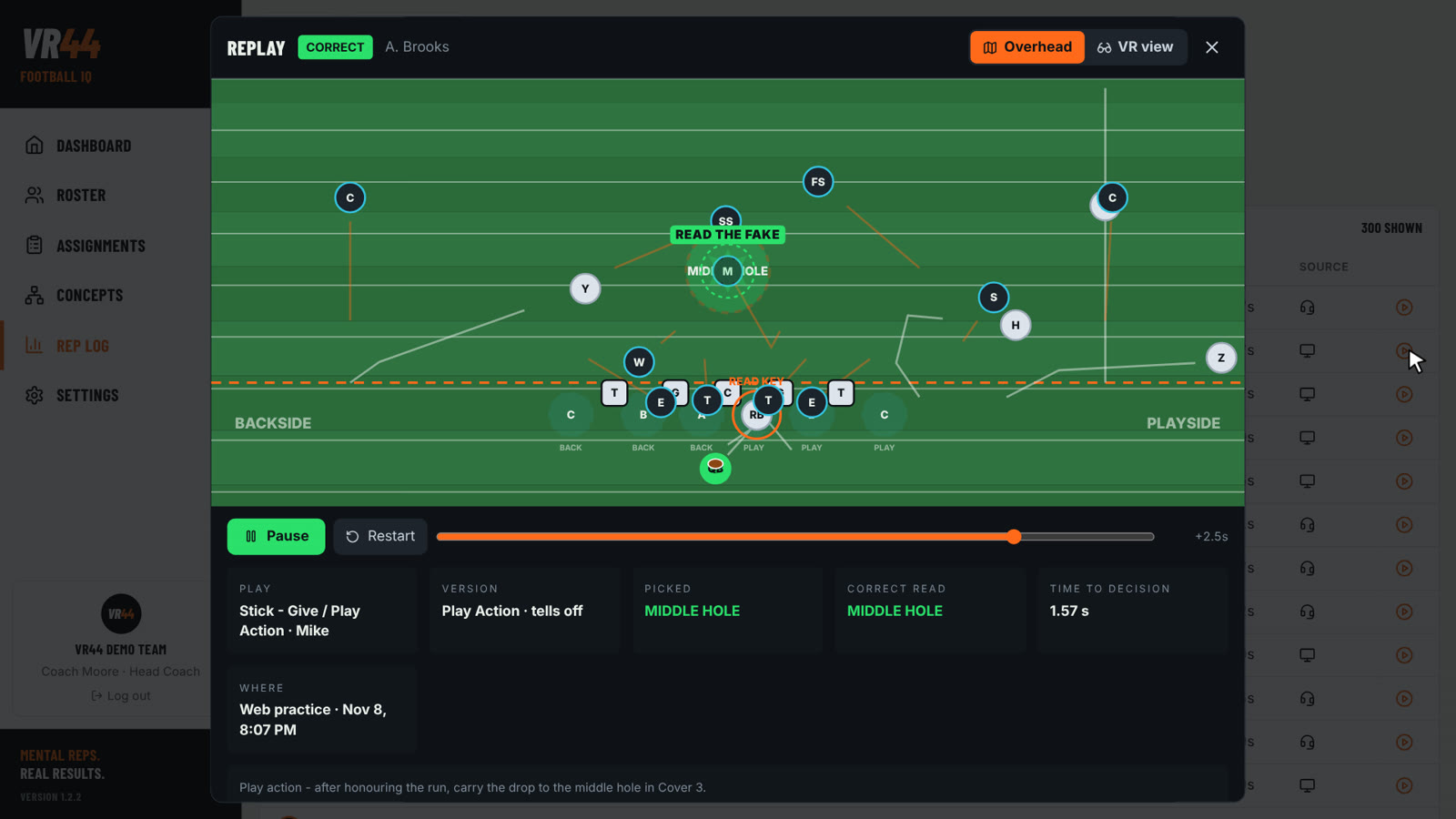
Watch any player who "just gets it" and you'll usually find the same thing underneath: he has seen that picture before. He knows what a defense looks like right before it does something, because he's watched it happen a hundred times. That recognition is learnable — it just takes volume, and volume is exactly what a practice schedule can't give you.
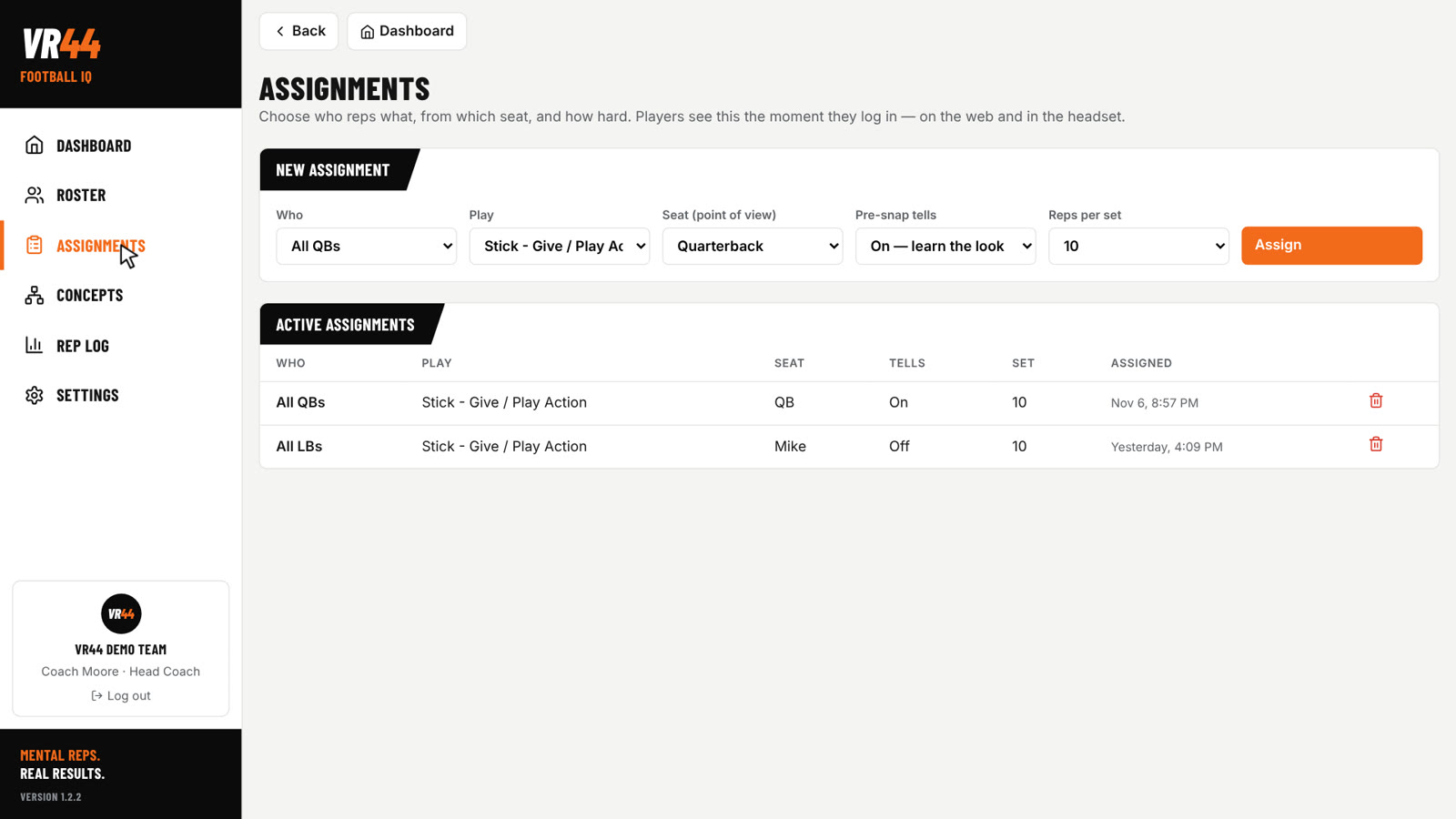
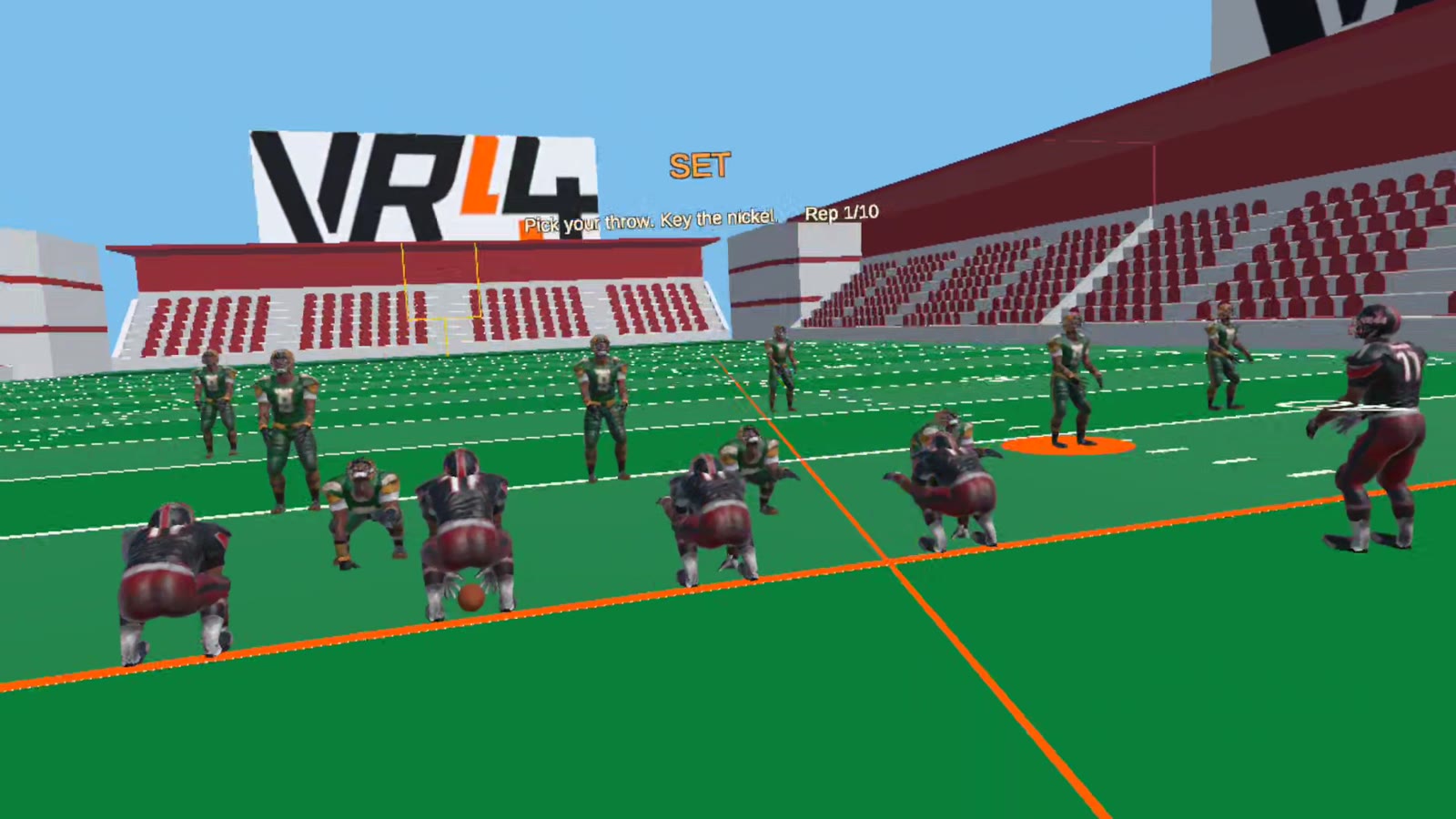
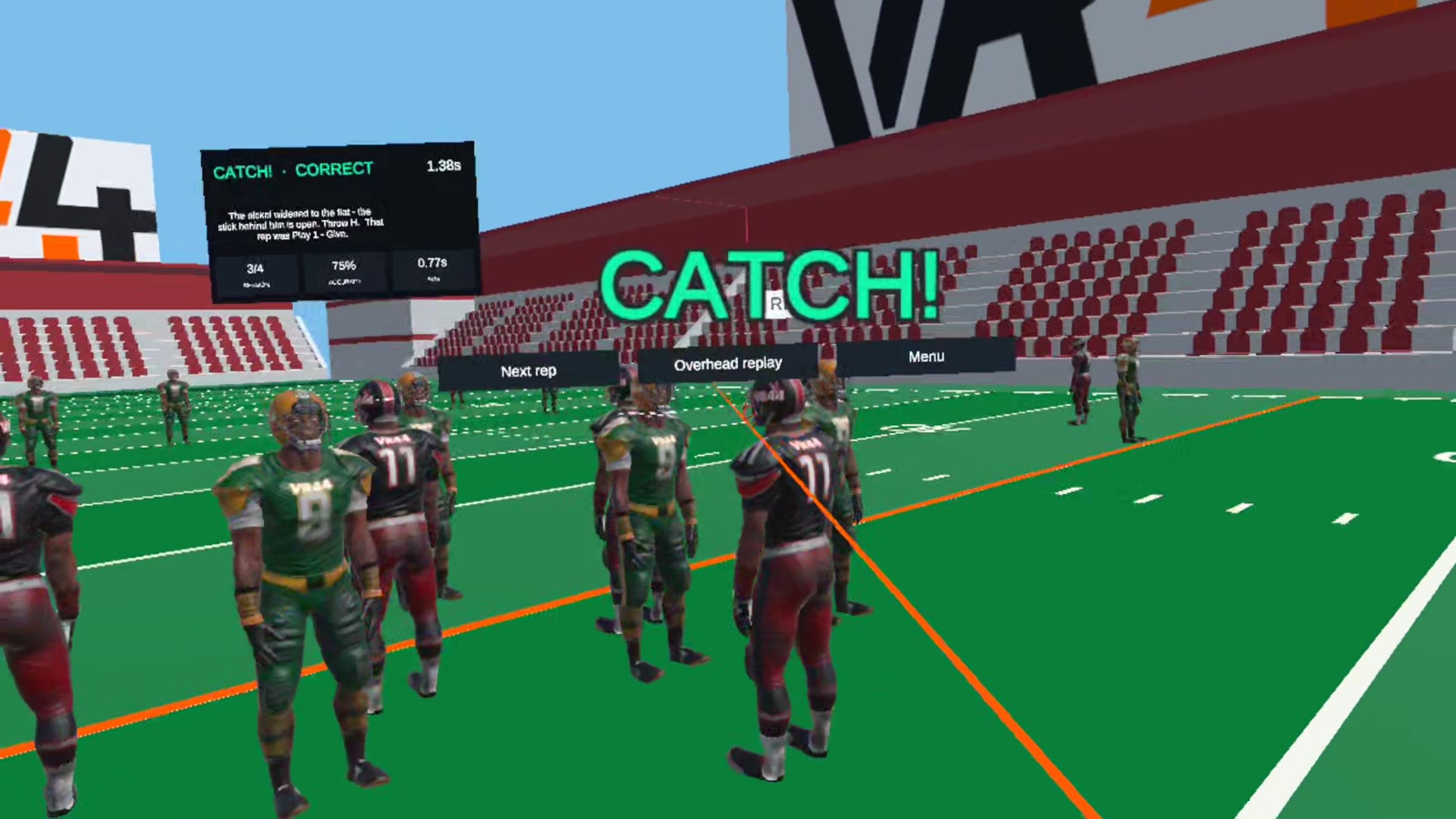
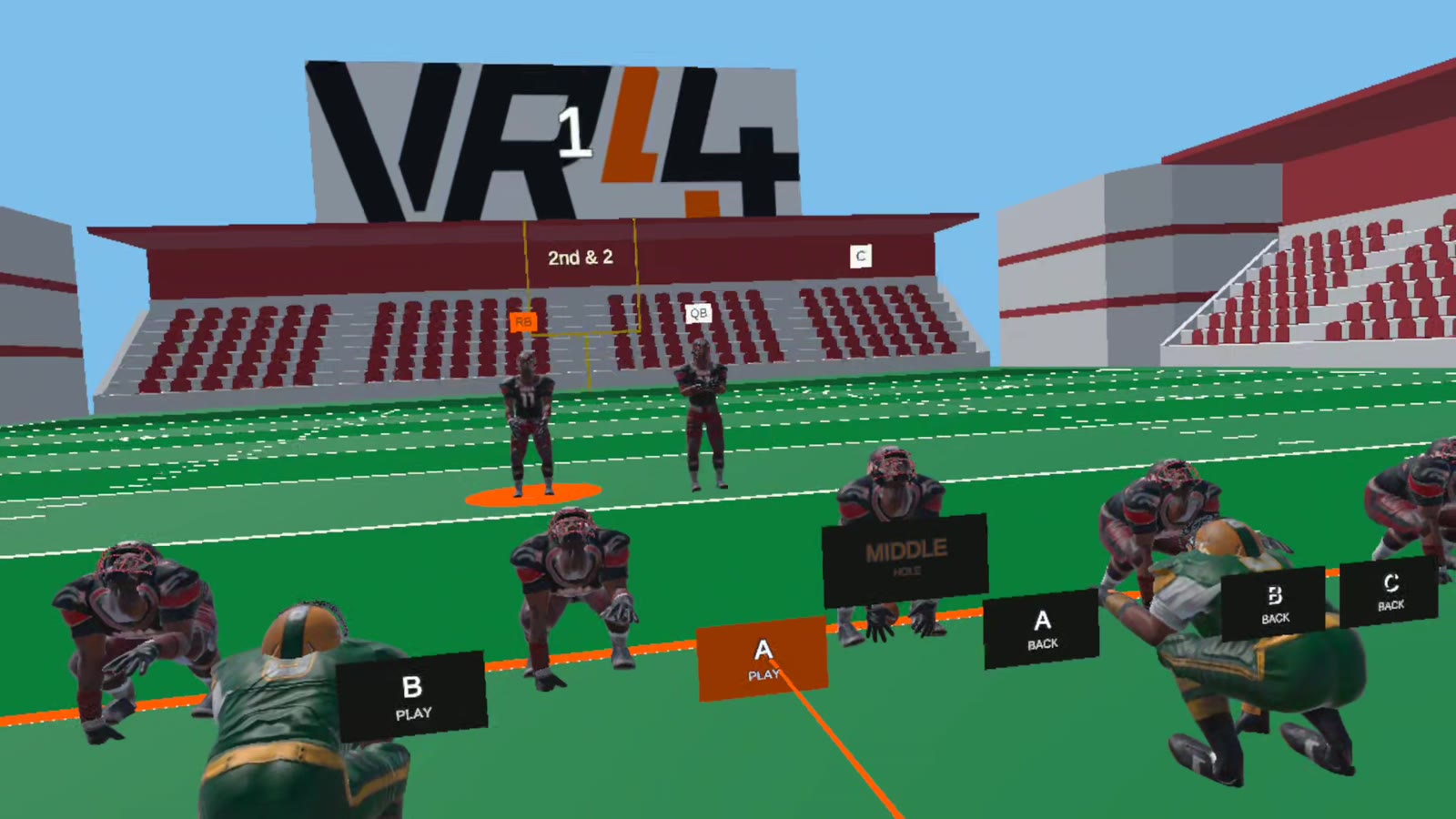
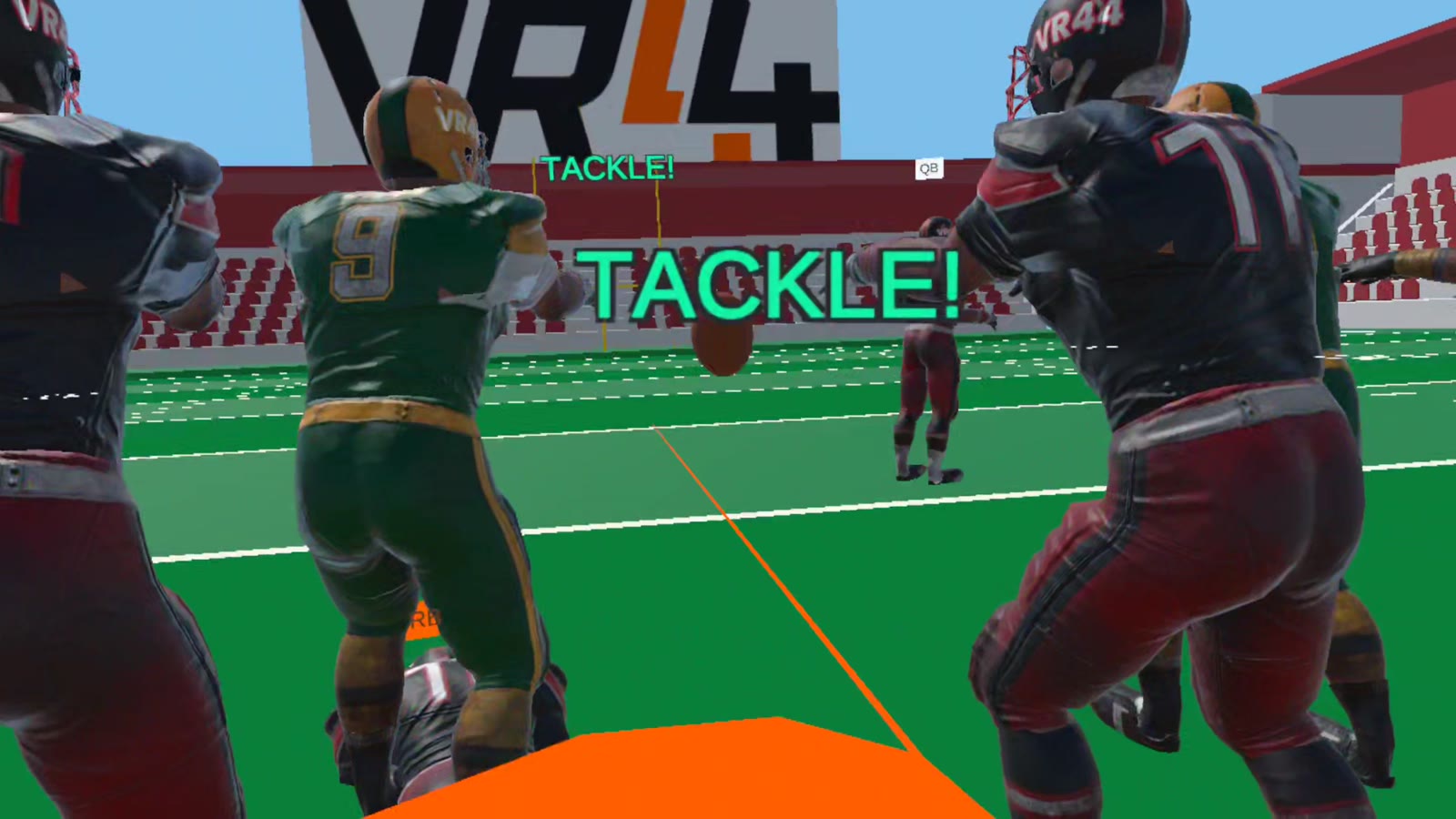
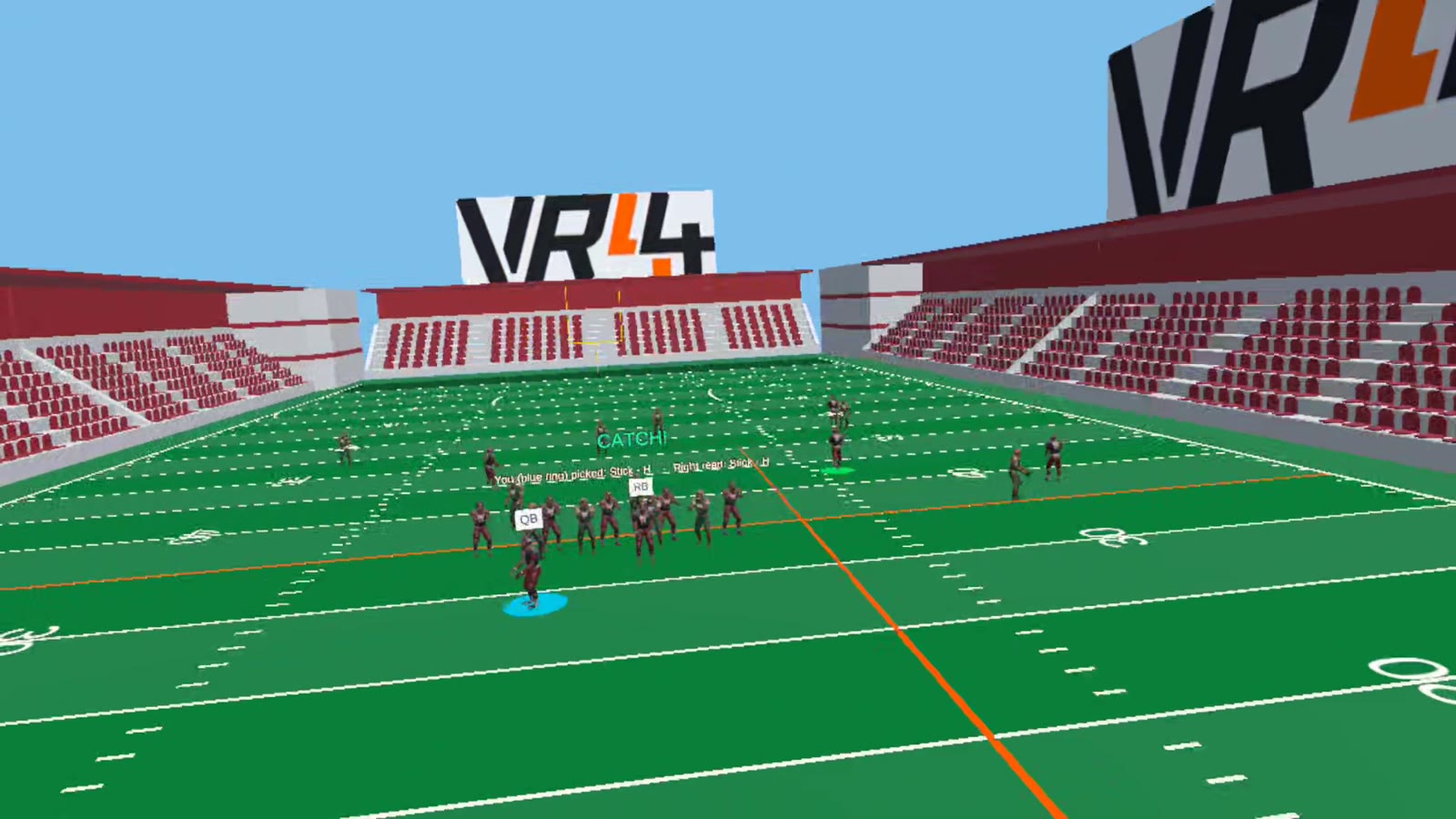
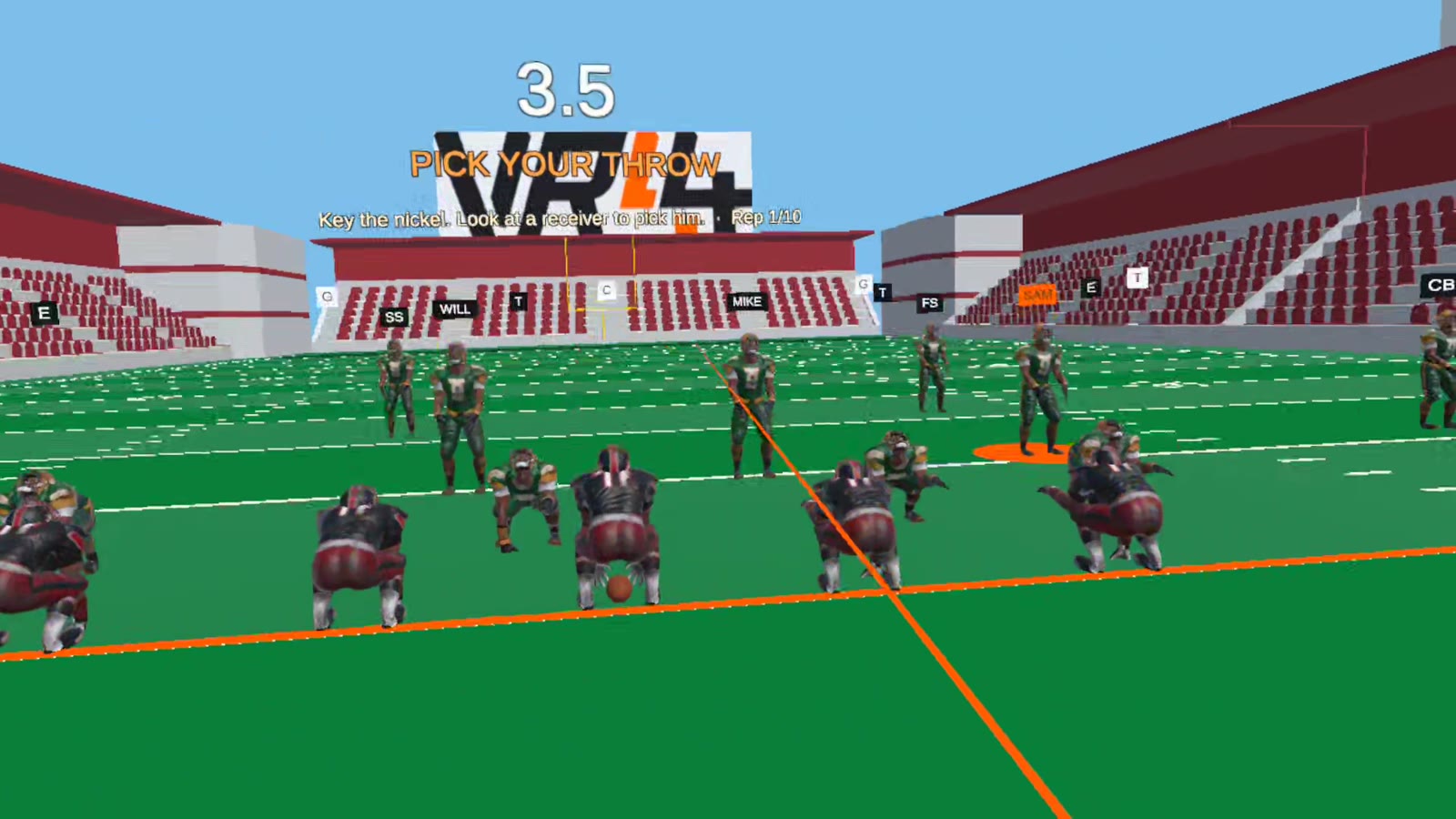
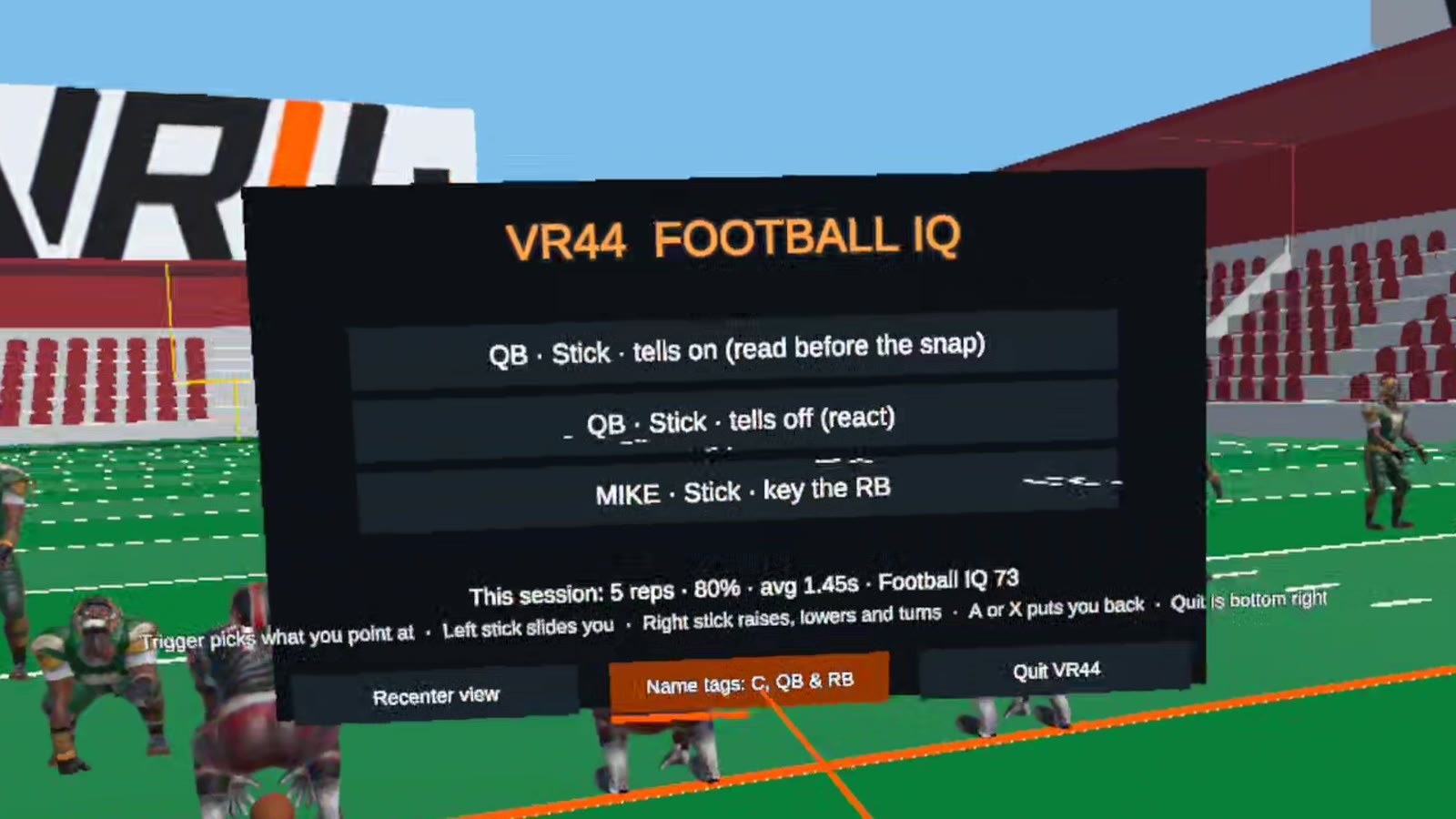
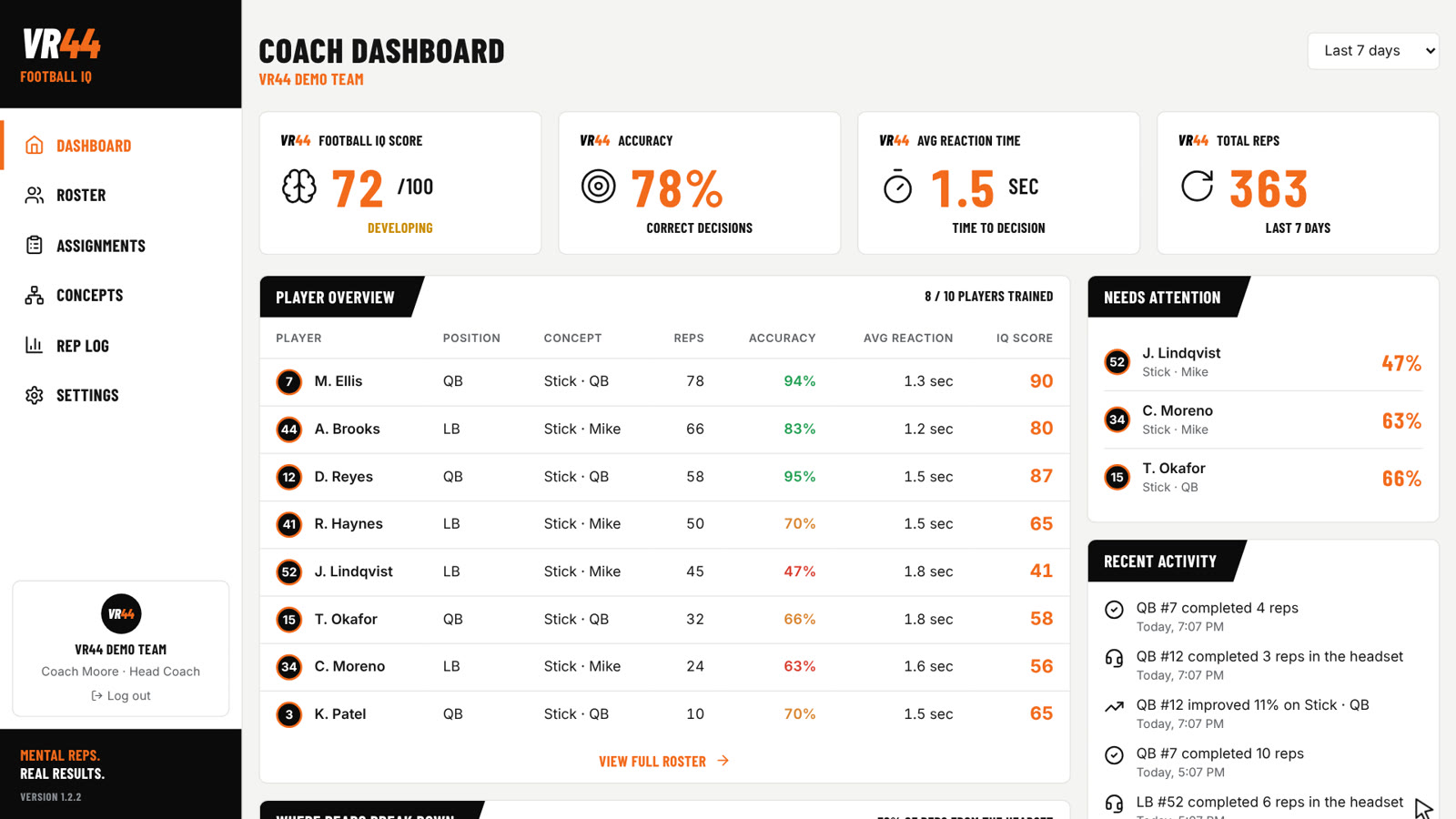
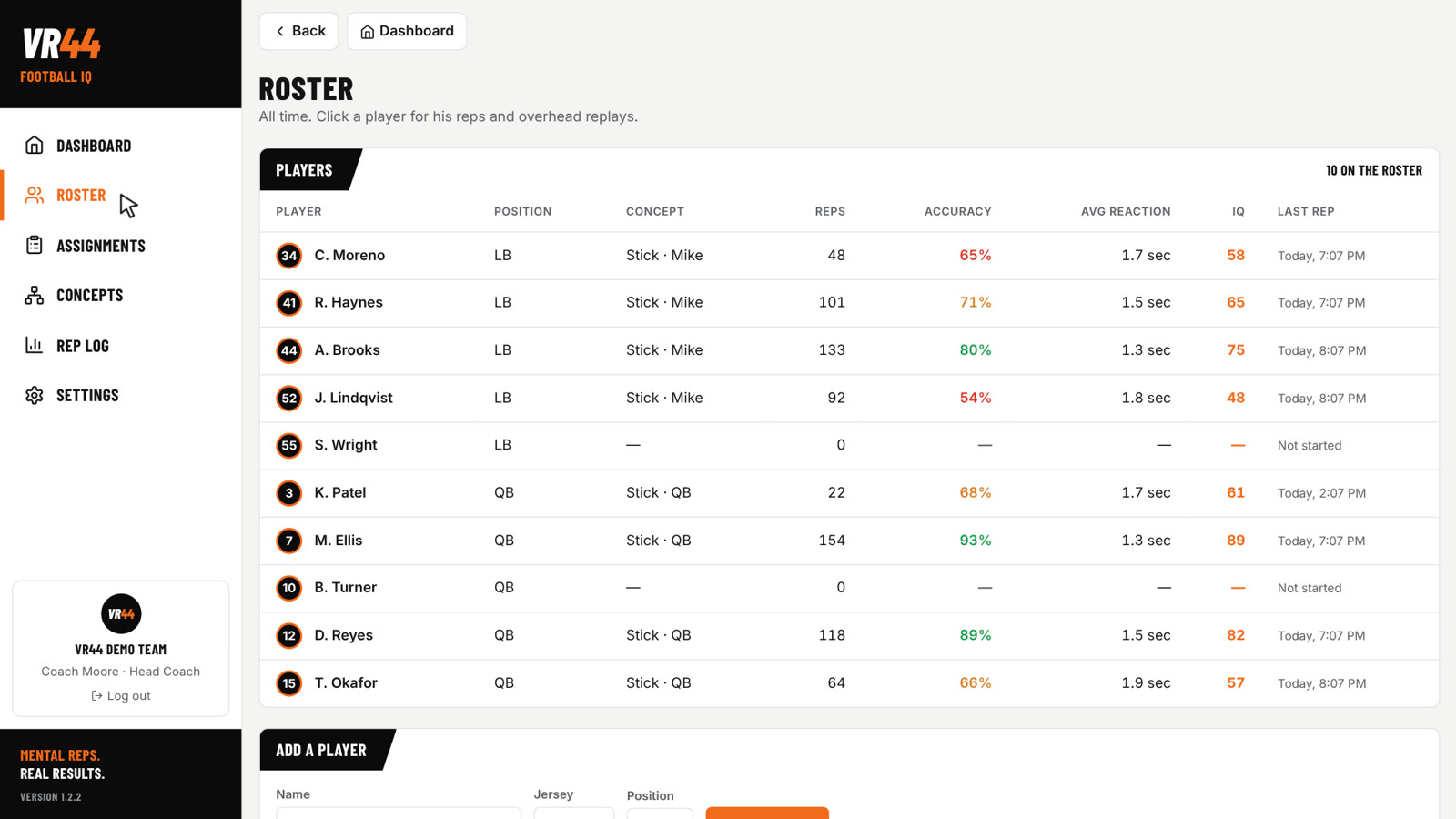
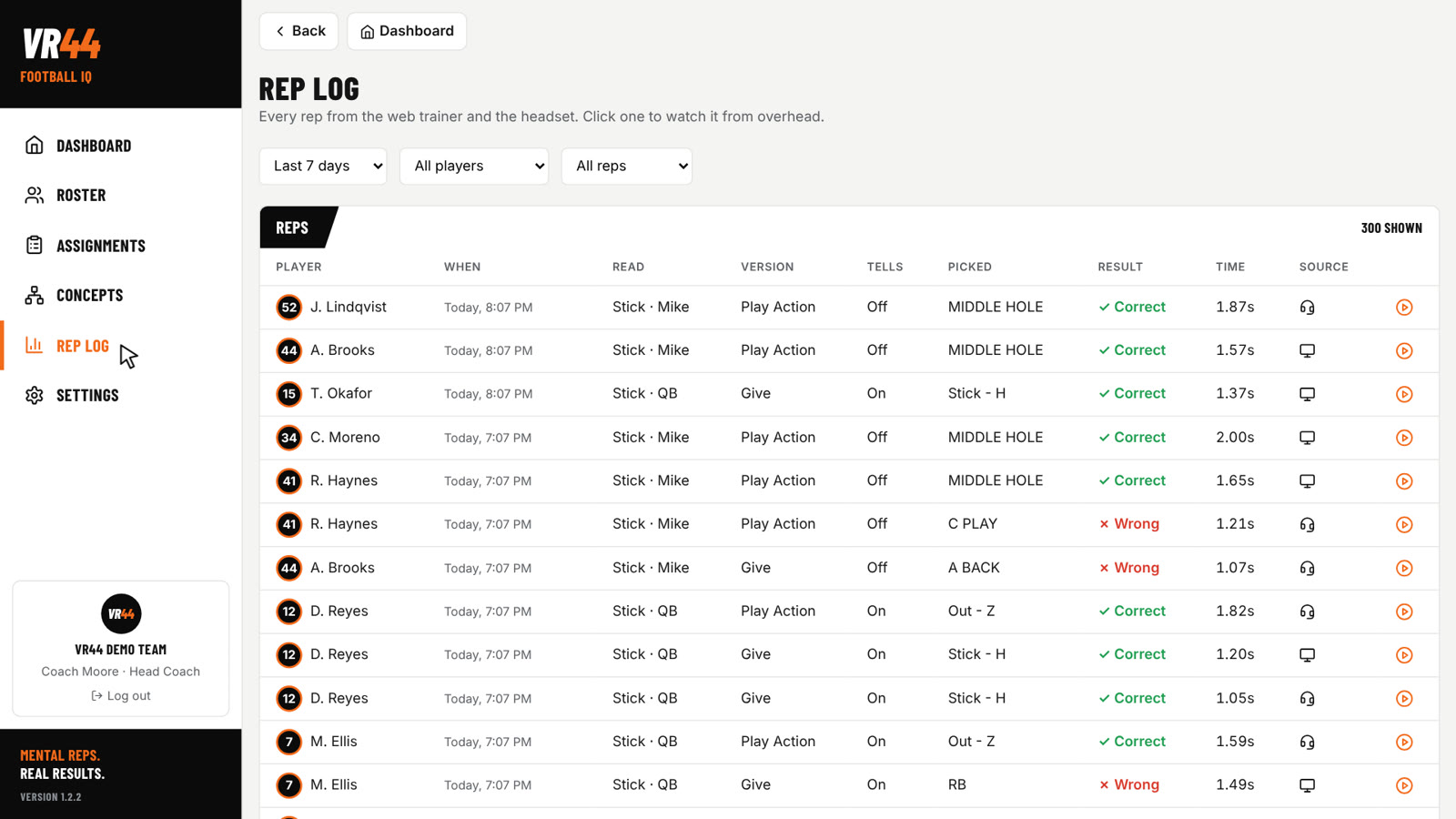
That's the gap VR44 was built to close. Not to replace practice, and not to replace coaching — but to give a young player somewhere to go and see the game again, and again, and again, until the picture finally slows down.